


 Jivan Android App
Revolutionizing Aerial Mapping: The Power of LiDAR Drones
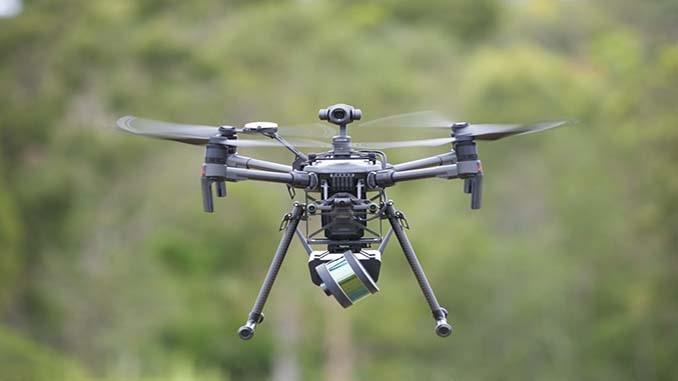
LiDAR drones are transforming the way industries collect, analyze, and interpret geospatial data. Combining the agility of drones with the precision of LiDAR (Light Detection and Ranging) technology, these aerial platforms offer highly accurate 3D mapping and surveying capabilities. Unlike traditional surveying methods, which are often time-consuming and labor-intensive, LiDAR drones can cover large areas quickly, capturing millions of precise data points with minimal human intervention. This efficiency makes them particularly valuable in sectors such as construction, forestry, agriculture, and environmental monitoring.
Source - https://www.marketresearchfuture.com/reports/lidar-drone-market-22571
The technology behind LiDAR drones involves emitting laser pulses toward the ground or objects and measuring the time it takes for these pulses to bounce back. This process generates detailed point clouds, which can be used to create 3D models, topographic maps, and digital elevation models. The combination of drones and LiDAR allows for data collection in challenging environments, such as dense forests, rugged terrains, or disaster-affected areas, where conventional surveying methods would struggle. As a result, organizations can make informed decisions faster and with higher accuracy.
In agriculture, LiDAR drones are revolutionizing precision farming practices. By generating detailed terrain maps, they help farmers identify irrigation patterns, monitor crop health, and optimize planting strategies. Similarly, in construction and urban planning, these drones provide real-time monitoring of site progress, accurate volumetric measurements, and enhanced planning for infrastructure development. Environmental scientists also benefit from LiDAR drone surveys by tracking changes in ecosystems, assessing forest density, and monitoring erosion or flood risks.
One of the most significant advantages of LiDAR drones is their ability to operate in low-light or nighttime conditions. Unlike traditional photogrammetry, which relies on visible light and can be hindered by shadows or poor lighting, LiDAR uses laser pulses, making it effective regardless of ambient light. This capability greatly expands the window for data collection and increases overall operational efficiency. Moreover, the integration of advanced software enables automated data processing, visualization, and analysis, allowing professionals to extract actionable insights quickly.
As the technology continues to evolve, LiDAR drones are becoming more affordable and accessible to a wider range of industries. Innovations in sensor miniaturization, drone battery life, and AI-powered data analytics are enhancing their capabilities and usability. Key players in this market are continuously pushing the boundaries of precision, speed, and data integration, driving the adoption of LiDAR drones across sectors.
LiDAR drones are transforming the way industries collect, analyze, and interpret geospatial data. Combining the agility of drones with the precision of LiDAR (Light Detection and Ranging) technology, these aerial platforms offer highly accurate 3D mapping and surveying capabilities. Unlike traditional surveying methods, which are often time-consuming and labor-intensive, LiDAR drones can cover large areas quickly, capturing millions of precise data points with minimal human intervention. This efficiency makes them particularly valuable in sectors such as construction, forestry, agriculture, and environmental monitoring.
Source - https://www.marketresearchfuture.com/reports/lidar-drone-market-22571
The technology behind LiDAR drones involves emitting laser pulses toward the ground or objects and measuring the time it takes for these pulses to bounce back. This process generates detailed point clouds, which can be used to create 3D models, topographic maps, and digital elevation models. The combination of drones and LiDAR allows for data collection in challenging environments, such as dense forests, rugged terrains, or disaster-affected areas, where conventional surveying methods would struggle. As a result, organizations can make informed decisions faster and with higher accuracy.
In agriculture, LiDAR drones are revolutionizing precision farming practices. By generating detailed terrain maps, they help farmers identify irrigation patterns, monitor crop health, and optimize planting strategies. Similarly, in construction and urban planning, these drones provide real-time monitoring of site progress, accurate volumetric measurements, and enhanced planning for infrastructure development. Environmental scientists also benefit from LiDAR drone surveys by tracking changes in ecosystems, assessing forest density, and monitoring erosion or flood risks.
One of the most significant advantages of LiDAR drones is their ability to operate in low-light or nighttime conditions. Unlike traditional photogrammetry, which relies on visible light and can be hindered by shadows or poor lighting, LiDAR uses laser pulses, making it effective regardless of ambient light. This capability greatly expands the window for data collection and increases overall operational efficiency. Moreover, the integration of advanced software enables automated data processing, visualization, and analysis, allowing professionals to extract actionable insights quickly.
As the technology continues to evolve, LiDAR drones are becoming more affordable and accessible to a wider range of industries. Innovations in sensor miniaturization, drone battery life, and AI-powered data analytics are enhancing their capabilities and usability. Key players in this market are continuously pushing the boundaries of precision, speed, and data integration, driving the adoption of LiDAR drones across sectors.
Revolutionizing Aerial Mapping: The Power of LiDAR Drones
LiDAR drones are transforming the way industries collect, analyze, and interpret geospatial data. Combining the agility of drones with the precision of LiDAR (Light Detection and Ranging) technology, these aerial platforms offer highly accurate 3D mapping and surveying capabilities. Unlike traditional surveying methods, which are often time-consuming and labor-intensive, LiDAR drones can cover large areas quickly, capturing millions of precise data points with minimal human intervention. This efficiency makes them particularly valuable in sectors such as construction, forestry, agriculture, and environmental monitoring.
Source - https://www.marketresearchfuture.com/reports/lidar-drone-market-22571
The technology behind LiDAR drones involves emitting laser pulses toward the ground or objects and measuring the time it takes for these pulses to bounce back. This process generates detailed point clouds, which can be used to create 3D models, topographic maps, and digital elevation models. The combination of drones and LiDAR allows for data collection in challenging environments, such as dense forests, rugged terrains, or disaster-affected areas, where conventional surveying methods would struggle. As a result, organizations can make informed decisions faster and with higher accuracy.
In agriculture, LiDAR drones are revolutionizing precision farming practices. By generating detailed terrain maps, they help farmers identify irrigation patterns, monitor crop health, and optimize planting strategies. Similarly, in construction and urban planning, these drones provide real-time monitoring of site progress, accurate volumetric measurements, and enhanced planning for infrastructure development. Environmental scientists also benefit from LiDAR drone surveys by tracking changes in ecosystems, assessing forest density, and monitoring erosion or flood risks.
One of the most significant advantages of LiDAR drones is their ability to operate in low-light or nighttime conditions. Unlike traditional photogrammetry, which relies on visible light and can be hindered by shadows or poor lighting, LiDAR uses laser pulses, making it effective regardless of ambient light. This capability greatly expands the window for data collection and increases overall operational efficiency. Moreover, the integration of advanced software enables automated data processing, visualization, and analysis, allowing professionals to extract actionable insights quickly.
As the technology continues to evolve, LiDAR drones are becoming more affordable and accessible to a wider range of industries. Innovations in sensor miniaturization, drone battery life, and AI-powered data analytics are enhancing their capabilities and usability. Key players in this market are continuously pushing the boundaries of precision, speed, and data integration, driving the adoption of LiDAR drones across sectors.
0 Comments
0 Shares
17 Views
0 Reviews

 Hindi
Hindi